My inactivity has been due to the onslaught of assignments as of late. But they're all finished now!... Except I still have to study for exams... shit.
I read this on The Drum the other day. It's about politics AND the media. My two favourite things ever!!
Ultimately our political culture is strengthened by a strong media. We rely on journalists to ask the questions that we can't. Imagine how our democracy would look if there was the same level of interest in policy as there was in personality. At the moment it's a pretty disappointing affair, with way too much sizzle and not enough sausage.
What I want to ask is: how is what the media IS asking relevant?
All we hear about is the fighting between the two major parties. It's rare that policy is debated. And when it is, all they do is berate the other side.
As a politics student I understand the desire for power. But what I don't understand is how neither side will ever compromise or agree with one another. That's what strong political leadership is, being able to do what is right regardless of your political persuasion. I mean, the Liberals are about free markets and liberal economics. And they have come forward saying that they support the reforms in aged care and disability pensions. But they still go on about the cost! They're ignoring what is morally right. And what is right is that we look after our most vulnerable citizens. That is what a liberal democracy does.
I know I'm always having a go at the Liberals on here, but Labor really isn't any better.
And as a journalism student, I don't understand why the media makes such a big deal about the fighting between the two parties! We're taught to be objective and to seek the truth. What the hell were our current journalists taught?! I want to know what the government and opposition propose we do about issues such as climate change, asylum seekers, and gay marriage. I don't want to see Tony Abbott standing next to signs calling Julia Gillard a liar or saying that she's Bob Brown's bitch.
A few weeks ago on ABC Radio they were having a discussion about Australian politics and the Westminster system itself. I can't for the life of me remember who was on, but what they all said was so true. They said that the Westminster system creates an adversarial political system. So no one can agree with their opponents for fear of the consequences from their own party.
See why I believe so strongly in an Australian republic??
I am sick of the bullshit that fills the news when it comes to politics. I want to see objective, truth seeking, and reliable reporting when it comes to politics.
Schlesinger, P.
(1993). Islam, postmodernity and the media: an interview with Akbar S. Ahmed. Media, Culture & Society, 15(1),
29-42. doi 10.1177/016344393015001003
Philip Schlesinger wrote this article while working in the
Department of Film and Media Studies at University of Stirling, Scotland. He conducts an interview with Pakistani
anthropologist Akbar S. Ahmed.
Schlesinger is interested in Ahmed’s research into the media and
postermodernity when it comes to Western perceptions of Muslims and vice
versa. Ahmed argues that the media and
globalisation are making it impossible for groups in society to isolate
themselves and live a traditional lifestyle.
Ahmed relates this to an East-West division that is built on thousands
of years of history and social relations.
Schlesinger probes the argument put forward in Ahmed’s research about
film and television media and their role in postmodernity in the Muslim
world. Ahmed essentially argues that
postmodernity is culturally contextual, for Muslims it has to do with the
changing world order after the Cold War.
He stresses that the global aspect of Western media is intruding on
traditional values and providing Muslims with misleading images of Western
society and causing tension. Ahmed
suggests that reconciliation between Western and Muslim cultures needs to be
based on respect, cooperation and celebration of differences. Schlesinger conducts the interview with
respect to Ahmed’s views but does attempt to highlight his cultural bias and
prejudices.
Greg Barns has written something close to an editorial but
with a heavy analysis of social and political commentary and Australian
law. Barns assesses the comments by
South Australian Liberal Senator Cory Bernardi who made a claim that the burqa
should be banned in Australia. Senator
Bernardi made this claim after an incident in Sydney when a thief used a burqa
as a disguise. Senator Bernardi links the
wearing of the burqa to repression of women by Muslim society as well as
criminality in Western society. Barns
writes that Senator Bernardi’s call for banning the burqa is more ‘sinister’
than claims from other countries. He
makes this assertion within the framework of racial vilification laws in
Australia. While these laws vary from
state to state, Barns reviews each state and claims that Bernardi is in breach
of racial vilification laws in Queensland, Tasmania and Victoria. Barns claims that Senator Bernardi cannot
defend himself against these laws by arguing that his comments were in good
faith, as linking the burqa to oppression and criminality are deemed
irrational. Barns accuses Senator
Bernardi of breaching these laws as he has incited ‘serious contempt’ for
Australian Muslims. This piece comes
across as opinionated as Barns claims that Senator Bernardi’s comments are the
most sinister ever made on the topic.
This statement is put forward before the legal and social justificatory
framework. This piece highlights that
there is not a celebration of differences between Muslims and Australians.
This article was written after the French government
implemented controversial laws that banned citizens from wearing face veils in
public. The writer highlights the
immediate civil disobedience campaign against these laws by stating that two
women, wearing niqab veils, were arrested.
However, according to French authorities, they were arrested for
participating in an unauthorised demonstration.
The article includes comments from a variety of sources. The French government said that the ban is
due to male oppression of women. Muslim
leaders in France state that they are neither for or against the banning of
face veils, as wearing these garments is a cultural, rather than religious
practice. Protestors claim that the ban
is against their European and human rights.
The author analyses the reasoning behind the French government’s
decision to ban face veils. According to
official rhetoric, it is to promote France’s secular values and educate the
people about the responsibilities of French citizenship. However, some human rights groups argue that
it was a move by former French President Nicholas Sarkozy to win votes from
far-right voters. Al Jazeera is known
for delivering news from a non-Western perspective and relies heavily on
non-governmental sources in this piece, although it still does provide a
balanced argument. This piece highlights
that there is not much respect between Western and Muslim culture and that
differences are not being celebrated.
This article discusses international and customary law
regarding several countries’ attempts to ban the wearing of burqas. This article consults human rights
commissioner for the Council of Europe, Thomsas Hammarberg, to discuss the
social, legal and normative dimensions and implications of banning the burqa in
European society. According to
Hammarberg, banning face veils would be an ‘unreasonable’ invasion of personal
privacy and would not liberate oppressed women.
He argues that banning the burqa and other face veils would in fact do
the opposite of what the supporters are trying to promote, it would actually
lead to further alienation and segregation of society. Hammarberg not only relies on this social and
normative argument, but also on the basis of international and European
law. He states that banning the burqa
would be against the European Convention of Human Rights depending on the
context of the banning laws. Hammarberg
then analyses the situation in France where he denounces their approach and
calls it undemocratic considering the circumstances. SBS is known for presenting a multicultural
view on current affairs and has often been criticised for having a left-wing
bias. This article calls for respect and
cooperation between Western and Muslim cultures and to celebrate the
differences.
That's what a news value is. What deserves to receive attention.
I don't really know how to feel about that... I mean, I understand that there is just too much going on for it all to be reported. But everything that happens is going to have an affect that will impact someone. So shouldn't people know about this? What do I know? I'm a first year uni student, I'll learn in time.
In this modern age we need to make everything appealing, even the news, because lets face it, people need to know what's happening around them no matter how dull it is. So everything is transient according to the general public. Life is only a series of unrelated events...
As Arthur Evelyn Waugh puts it:
News is what a chap
who doesn't care much
about anything wants to
read. And it's only news
until he's read it. After
that it's dead.
There are four main aspects of news values:
IMPACT
AUDIENCE IDENTIFICATION
PRAGMATICS
SOURCE INFLUENCE
These aspects result in what news values is all about
NEWSWORTHINESS
Despite all sources of media trying to be relevant to the public, we can't say that news values are universal across all cultures and societies. And to me, that will make working in the media fun. I intend to travel and work overseas after uni, so I'm really looking forward to the challenge of working with a new culture and new people. My education is going to teach me to how report what is worthy of people knowing about, while travelling is going to teach me what is worthy to different people.
But there are two values that people who work in media across different cultures believe in:
If it bleeds, it leads
It it's local, it leads
People are drawn to tragedy. A sad and morbid fact. So, serious hard hitting stories are going to get people's attention. And of course, people want to know what's going on in their local community.
News values shape these ideas because news values determine them. News values are what makes journalists chose stories full of blood and tragedy, and at the same time, stories close to home. Values vary from place to place, but they serve the same function: to keep an audience.
I think John Sergeant sums up news values pretty well:
Journalists rely on
instinct rather than
logic when it comes
to the defining a
sense of news
values.
There have been three main hypothesise about news values. Firstly by Galtung and Ruge, second by Golding and Elliot, and third by O'Neill and Harcup. They all try to explain what is newsworthy, essentially. And my first thought about them is that they appear very Western in their outlook... But that's just me and I haven't read anything else about them to really back up my claim.
However, news values have been threatened over the past couple of years by three factors:
Commercialisation of of Media and Social Life
Public Relations
Journalism's Ideals/Journalism's Reality
These three factors are limiting the reliability and quality of news in various forms of media. This then makes people question the values held by journalists and discredits the field.
One particularly interesting threat to news values is something called 'churnalism.' This is when journalists just churn out information from press and media releases by PR companies rather than write original reports that contain relevance to an audience.
Like I said in a previous blog post, I'm a massive fan of British comedy. It's just so much better than American comedy, and most Australian comedy for that matter. My favourite British comic (and lets face it, my favourite comic of all time) is Stephen Fry. I'm sure most of you know him from shows like Blackadder, A Bit of Fry and Laurie and QI. But he was in another show called Absolute Power, which is my favourite show with Stephen Fry in it.
Absolute Power is about a PR company, headed by Stephen's character Charles Prentiss, who disregard all forms of ethics and morals in order to do their job. I find hilarious as well as a quite thought provoking about the media. And it wasn't until I started JOUR1111 that I really began to fully understand the dynamics of the company and media in general.
In this episode, they are hired by a right-wing political party to handle their PR. Absolutely hilarious and raises questions about values in the media (sorry for the awful quality)
Part 1
Part 2
Another questionable client. They go ahead with it, by the way.
Another episode about politics
Part 1 This time with people that matter
Part 2 Taking it a step further...
Shaping public opinion
And my favourite episode. A comedy actor beats his heavily pregnant girlfriend in the car park at Ikea. And Charles takes on the challenge to sort out the wife beater's PR, with absolutely hilarious results.
This episode needs to be watched to be believed. The degree of manipulation and moral cowardice is enough to make you cringe yet piss laugh hysterically. Truth be told, Absolute Power is what got me interested in the media. I was really tempted to study PR. But I decided against because I knew I would never be as brilliant as Charles Prentiss, even though I lack a moral compass.
In our tute for JOUR1111 on ethics and news values, Carmel showed us this video about churnalism and the relationship between PR and journalism (I couldn't link the video like I did with the others for some reason...).
See any connections between Absolute Power and Chris Atkins' investigation?
Watch a full episode of Absolute Power. It will blow your mind how similar it is to Chris Atkins' video. And it's bloody hilarious. More than anything, watch it because it's funny and has Stephen Fry in it.
Values underpin everything in society. Not only do I have values as a (future/aspiring) journalist, I also have values as a student.
I went with good grades and enough sleep. I'm going to be a socially inept journalist/foreign affairs adviser one day. I try to make the right decision and I'm still disadvantaging myself.
I can't sleep and don't want to work on my International Relations essay so I'm just going to blog some stuff and listen to All The Rowboats by Regina Spektor on repeat.
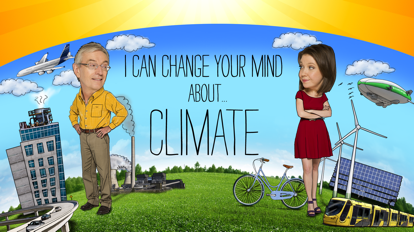
Because I've been busy I only watched the ABC's documentary I Can Change Your Mind About Climate and the following Q&A discussion last night.
My God, that was a PAINFUL two hours where I had to resist yelling at my laptop...
I seriously had hope for this. The ABC usually produces balanced and intelligent programs. Yet they cast two polar extremes in the climate debate where there was absolutely no chance that either of them would change their minds.
Nick Minchin is a moron. There I said it. And Anna Rose is annoying, despite myself being a member of the Australian Youth Climate Coalition.
They both arranged meetings with people that agreed with their respective views. It was pathetic.
Nick was just facetious the whole time and did nothing but try to discredit legitimate science with some of the most absurd claims I have ever heard.
His first interview with 'experts' was a couple in Perth who used to believe in anthropogenic climate change but are now sceptical of the idea. They said that one of thermometers that they use to measure temperatures around the world is located next to an airport and that the results are skewed. That means that every thermometer in the world can't be trusted...
Yeah, because scientists are that stupid...
And that atmospheric physicist who has taken money from groups with agendas about climate change. Nick only furthered Anna's point by not being able to produce anyone really reliable. Although his last guest, Bjorn Lomborg, suggested an investment over time in green technology made the most sense out of them all.
While Anna did have a lot of respectable scientists to help her case, she herself didn't do much for it. She just repeated herself over and over again. But I will concede that once you state the science behind climate change, there isn't really much else you can say.
The thing that annoyed me most was when Nick brought Marc Morano on...
Anyone who knows who Marc Morano is knows that he is definitely the most UNreliable source when it comes to ANYTHING to do with climate change.
Morano has been called one of the 25 most influential right wing journalists in the world. So clearly, the fact that he has a bias shows that he isn't a good journalist. He runs a blog called Climate Depot that only spreads climate change denial propaganda.
According to Source Watch, Morano has no scientific qualifications whatsoever. He has protectionist views of American industry and thinks that regulation for sustainability will endanger 'American values.' Morano continuously lists costs, figures and statistics that he does not reference. And a simple search for his information reveals no source. Morano lies in order to push his agenda. He is a narcissist and a disgrace to journalists everywhere.
My favourite guest on the show was scientist and writer Ben Goldacre. He said that anthropogenic climate change is almost universally accepted by scientists. Very rarely is there completely universal acceptance of something in science, so this is as good as we're going to get. Goldacre said that we shouldn't waste our breath with climate deniers. Debating something that is pretty much universally accepted only creates room for scepticism.
This raises an important point, should journalists allow for both sides of the argument to be represented in the media?
I think climate deniers should be kept out of the media. Yes they have the right to free speech and should be allowed to make their voices heard as that is a core tenet of liberal democracy that I hold dear. But, the media should only report on actual scientific evidence that supports anthropogenic climate change. I don't think this because I believe in climate change, I believe this because journalism is about reporting the truth. Anthropogenic climate change is pretty much universally accepted in the scientific community. You can't really get much closer to complete acceptance when you deal with idiots, and some scientists are idiots.
So, I Can Change Your Mind About Climate pissed me off unbelievable as the debate went absolutely nowhere. They came to 'common ground' at the end and then just went back to their polar extremes on the following Q&A discussion, which just rendered it pretty much pointless.
I can feel the rage build inside me as I write this so I'll be brief about the Q&A forum. Anna and Nick annoyed me because they just repeated themselves again. Chief executive of the CSIRO, Dr Megan Clark, social researcher and writer, Rebecca Huntley, and all round corporate fat cat Clive Palmer joined the panel.
Megan and Rebecca were by far the best that night. They were respectful with their answers, to the point and thought provoking with their commentary. Clive Palmer, don't get me started. And then to find out today that he's challenging Wayne Swan's seat... The last thing we need is his agenda being supported by Australian politics.
My opinion about the debate between climate alarmists and deniers can be summed up with the eloquent, funny and oh so true words of Ben Goldacre:
"I would rather slam my cock in a door than debate with someone who doesn't believe in anthropogenic climate change!"