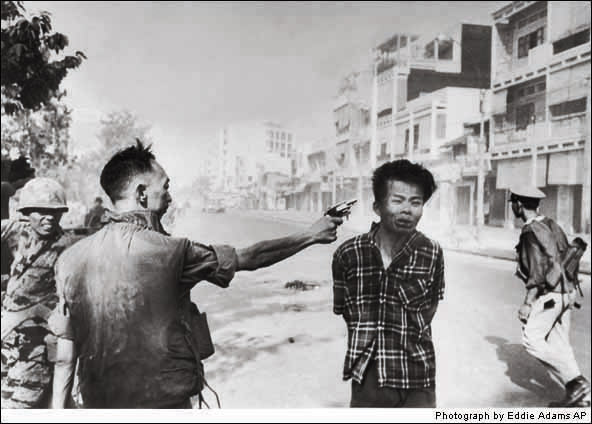
Investigative journalism. One of the subjects I get to look forward doing next semester.
I think investigative journalism is best described in this way:
Sceptical not cynical.
I'm actually really looking forward to investigative journalism and would love to be involved in these kind of projects during my career.
Being the outspoken politics student I am, I enjoy questioning the status quo and looking at the reasons underlying everything. Which is exactly what investigative journalists do. Journalists are sometimes referred to as the Fourth Estate in society, which is pretty true as they're the ones that question authority, or at least bring challenges to authority to public attention.
Investigative journalists dig deep into issues. They look at everything and anything that is related to the issue that they are covering. It's like doing a history/politics essay. You look at everything to gain the best understanding you can. Even though I bitch and moan about my essays, I do love learning about the topics. Investigative journalism is hard work, but I think it's definitely worth the effort in the end.
Investigative journalism also dispels my worries about agenda setting as it looks at the issue fully and is able to provide an analytical framework. I'm a real nerd that likes to know everything.
I like to think of the Four Corners report in the 80's, The Moonlight State, when I think about where I want to head in my media career. Chris Masters and his team (including Dr Redman) risked a lot in order to get the truth. They faced a corrupt government that would do almost anything to prevent their secrets from getting out.
And while on the topic of investigative journalism, Julian Assange and Wikileaks are not journalism in any shape or form. Assange just releases cables and lets them fall into the wrong hands. I'm very anti Iraq/Afghanistan War, but I don't attempt to endanger anyone's lives in order to get my point across. And all useful information from these cables has come from reporters from some the worlds largest newspapers going through them and discerning what is relevant to the public, and also how to protect soldiers and other such people involved.
I'm looking forward to investigative journalism next semester. Not because I find it interesting and quite noble, but because I think I'll be good at it. I don't think I'm a good journalist, I'm a good Facebook stalker which means I can dig up information quite easily. It is amazing what I've learnt from my hours of stalking...
The title refers to a previous blog post. I'm actually ridiculously unfunny. I'm a sarcastic bitch, which people do sometimes find funny but I really shouldn't encourage that...
I loved Bruce's opening about agenda setting for this lecture:
Agenda setting is a theory, but like all good, solid theories is all a bit obvious!
As interesting as I find agenda setting, it is pretty self explanatory. It's how the media shape public opinion.
Borrowing from the lecture slides...
So this kind of reminds me of 1984... as cynical as that seems. It just makes me think that there is stuff being hidden from us. Maybe I've gone insane from all this studying and what have you.
Essentially what agenda setting comes down to is news values. The Elders of the Newsroom decide what is newsworthy and give it extensive coverage which makes people perceive that it is important.
Again, returning to my 1984 analogy, this shows that some of our news providers have a vested interest in some issues and the public are being misinformed.
That's enough of my mad left-wing ideas for one blog post.
In the media there are four agendas:
Public Agenda
Policy Agenda
Corporate Agenda
Media Agenda
And somehow they are interrelated... Which just demonstrates the convergent and globalised world that we live in.
All forms of agenda setting work under two assumptions:
The mass media do not merely reflect and report reality, they filter and shape it.
Media concentration on a few issues and subjects leads the public to perceive those issues as more important than other issues.
This goes to show that news providers have a message to get across. What that message is varies from source to source. Some may be good, some may be a bit more... selfish (for a lack of a better term).
I'll let you make of that what you want
Agenda setting is usually symbolised as a hypodermic needle injecting information and news into society. I find this quite apt, as media is quite omnipresent in our modern society. It also shows how agenda setting can go wrong with the use of propaganda...
Agenda setting is a bit obvious isn't it?
I mean, there is a fair bit to it but the name does say it all.
The thing that troubles me about agenda setting is that news is meant to be objective and truthful. If the people who provide us with news have an agenda, what does that say about their representation of an issue?
That's what a news value is. What deserves to receive attention.
I don't really know how to feel about that... I mean, I understand that there is just too much going on for it all to be reported. But everything that happens is going to have an affect that will impact someone. So shouldn't people know about this? What do I know? I'm a first year uni student, I'll learn in time.
In this modern age we need to make everything appealing, even the news, because lets face it, people need to know what's happening around them no matter how dull it is. So everything is transient according to the general public. Life is only a series of unrelated events...
As Arthur Evelyn Waugh puts it:
News is what a chap
who doesn't care much
about anything wants to
read. And it's only news
until he's read it. After
that it's dead.
There are four main aspects of news values:
IMPACT
AUDIENCE IDENTIFICATION
PRAGMATICS
SOURCE INFLUENCE
These aspects result in what news values is all about
NEWSWORTHINESS
Despite all sources of media trying to be relevant to the public, we can't say that news values are universal across all cultures and societies. And to me, that will make working in the media fun. I intend to travel and work overseas after uni, so I'm really looking forward to the challenge of working with a new culture and new people. My education is going to teach me to how report what is worthy of people knowing about, while travelling is going to teach me what is worthy to different people.
But there are two values that people who work in media across different cultures believe in:
If it bleeds, it leads
It it's local, it leads
People are drawn to tragedy. A sad and morbid fact. So, serious hard hitting stories are going to get people's attention. And of course, people want to know what's going on in their local community.
News values shape these ideas because news values determine them. News values are what makes journalists chose stories full of blood and tragedy, and at the same time, stories close to home. Values vary from place to place, but they serve the same function: to keep an audience.
I think John Sergeant sums up news values pretty well:
Journalists rely on
instinct rather than
logic when it comes
to the defining a
sense of news
values.
There have been three main hypothesise about news values. Firstly by Galtung and Ruge, second by Golding and Elliot, and third by O'Neill and Harcup. They all try to explain what is newsworthy, essentially. And my first thought about them is that they appear very Western in their outlook... But that's just me and I haven't read anything else about them to really back up my claim.
However, news values have been threatened over the past couple of years by three factors:
Commercialisation of of Media and Social Life
Public Relations
Journalism's Ideals/Journalism's Reality
These three factors are limiting the reliability and quality of news in various forms of media. This then makes people question the values held by journalists and discredits the field.
One particularly interesting threat to news values is something called 'churnalism.' This is when journalists just churn out information from press and media releases by PR companies rather than write original reports that contain relevance to an audience.
Like I said in a previous blog post, I'm a massive fan of British comedy. It's just so much better than American comedy, and most Australian comedy for that matter. My favourite British comic (and lets face it, my favourite comic of all time) is Stephen Fry. I'm sure most of you know him from shows like Blackadder, A Bit of Fry and Laurie and QI. But he was in another show called Absolute Power, which is my favourite show with Stephen Fry in it.
Absolute Power is about a PR company, headed by Stephen's character Charles Prentiss, who disregard all forms of ethics and morals in order to do their job. I find hilarious as well as a quite thought provoking about the media. And it wasn't until I started JOUR1111 that I really began to fully understand the dynamics of the company and media in general.
In this episode, they are hired by a right-wing political party to handle their PR. Absolutely hilarious and raises questions about values in the media (sorry for the awful quality)
Part 1
Part 2
Another questionable client. They go ahead with it, by the way.
Another episode about politics
Part 1 This time with people that matter
Part 2 Taking it a step further...
Shaping public opinion
And my favourite episode. A comedy actor beats his heavily pregnant girlfriend in the car park at Ikea. And Charles takes on the challenge to sort out the wife beater's PR, with absolutely hilarious results.
This episode needs to be watched to be believed. The degree of manipulation and moral cowardice is enough to make you cringe yet piss laugh hysterically. Truth be told, Absolute Power is what got me interested in the media. I was really tempted to study PR. But I decided against because I knew I would never be as brilliant as Charles Prentiss, even though I lack a moral compass.
In our tute for JOUR1111 on ethics and news values, Carmel showed us this video about churnalism and the relationship between PR and journalism (I couldn't link the video like I did with the others for some reason...).
See any connections between Absolute Power and Chris Atkins' investigation?
Watch a full episode of Absolute Power. It will blow your mind how similar it is to Chris Atkins' video. And it's bloody hilarious. More than anything, watch it because it's funny and has Stephen Fry in it.
Values underpin everything in society. Not only do I have values as a (future/aspiring) journalist, I also have values as a student.
I went with good grades and enough sleep. I'm going to be a socially inept journalist/foreign affairs adviser one day. I try to make the right decision and I'm still disadvantaging myself.
Five years of Catholic education and learning about morals and ethics, I'm an atheist and lack a moral compass...
I guess what this lecture asked us to look at is whether or not media is unethical or just in bad taste.
I am very hard to offend due to my amoral status (if anything Catholic education just makes people more cynical, that was definitely the case with my school). However, I understand that other people have different feelings and thoughts than me, so I do try to tread lightly around controversial issues.
Returning to the media, I think there's a weird juxtaposition when it comes to ethics and taste.
Take for instance this ad for the World Wildlife Fund.
To compare an act of violence against civilians to a natural disaster is immensely insensitive, even I know that. And this doesn't even help the cause of WWF. They talk about how the world is more powerful than people (using the worst analogy ever) and then say that we have to conserve the world... Following the logic of this ad, the world should be able to take care of itself (I am all for ecological sustainability and conservation don't get me wrong, this ad is just stupid).
Now, I'm going to keep talking about the media but I'm going to bring up something personal. In any religion class I did at school we learnt about ethical and moral frameworks, and we were given real life examples were we could apply them. Every example was abortion. Abortion is the easiest thing to condemn using an ethical framework.
People are allowed to have opinions and views that differ from me, I'm not expecting everyone to be pro choice like me. However, I won't stand by and let people be indoctrinated into following something that they don't understand fully. Admittedly I was at a Catholic school where life is considered sacrosanct. However, I won't stand by and let biased opinions (be them religious or otherwise) try to persuade our secular media.
There are so many things surrounding the issue of abortion that we can't just have a blanket rule that says they shouldn't be allowed. Why should women who have been abused have to have a child that will remind them of that terrible experience? Why should a woman give birth if it is going to endanger her own life?
Thinking about it maybe I do have some sort of moral compass... At least some sort of egalitarian one.
I think it comes down to this:
Media is meant to be unbiased and secular. People can use media to represent their ideas, but not to indoctrine people or force their agenda upon them. I think in the case of the Ron Paul ad, he is trying to appear both rational (as a doctor) and moral (as a Christian) which shows that he is trying to push his agenda by hiding behind this facade.
I'm in a weird place when it comes to ethics and morality. I don't really follow any moral codes apart from respecting others and treating others as I want them to treat me. I think when I work in the media one day I need to understand the various views and perspectives in the community or order to convey information and ideas properly. I also want to one day work in foreign affairs (hence doing an arts degree) and that too requires a moral approach. I have an obligation to do what is best for my country as well as for others in this world.
Ethics and morals are both the bane of my existence and what underpin how I act and view the world...
From one extreme to the other, we move from commercial media to public media.
Contrary to popular belief, public media isn't owned by the government, it's owned by the common people. I didn't know that until this week.
Used at the beginning of the lecture, I think this quote pretty much sums up everything:
'The difference between commercial broadcasting and public broadcasting is the difference between consumers and citizens.'
The point of public media is to support social and democratic processes. It does this through 'public value':
Embedding a 'public service ethos'
Value for license fee money
'Weighing public value against market impact'
Public consultation
Even though we don't have licence fees in Australia, the point remains the same. Public media is meant to be value for money, by providing people with everything from entertainment, to interest to useful information.
The Australian public media is primarily made up of the Australian Broadcasting Corporation (ABC) and Special Broadcasting Service (SBS).
ABC and SBS are considered public media because they fit the criteria that has been set out for them:
Geographic universality
Universality of appeal
Special provisions for minorities
Special relationship with community and nation
Liberate rather than restrict broadcasters
Distanced from all vested interests
Competition for good programming rather than competition for numbers
The function of public media is provide a forum for discussion and debate about topical cultural, social, political and economic issues. There is also scope for local and regional issue to be discussed with various branches of public media.
Even though ABC and SBS receive government subsidies, they do have a commercial aspect. However, in my opinion, this hasn't hindered their performance for delivering outstanding programs. They have separated their business interests from their social functions which doesn't damage their integrity or quality.
News and current affairs are an integral part of ABC and SBS. ABC provides local and national news at a very in depth level. While SBS covers national and international news at a very in depth level. Not only is the quality and content of their news better and more informative than that of commercial media's, but they have another advantage. ABC and SBS provide a forum for people to openly debate social and political issues where they can be respected. Q&A on ABC and Insight on SBS are the prime examples of this. These two clips illustrate their commitment to discussing key issues and topics.
These clips also illustrate the style and form of public media, which is: serious, importance over interest and considered (not quick and unchecked).
However, public media has been criticised for being boring, elitist, of limited interested and poorly presented.
I don't believe these criticisms as people these days just don't seem to care enough about real issues and won't give money to public media to provide this information.
Public media actively encourages people to make their voices and opinions heard, while commercial media just promotes its own agenda and even tries to force it upon people.
Public media also aims to promote political neutrality, while commercial media has a specific view that it will try to put forward. While both ABC and SBS have been criticised for being left wing, they still do give time for every opinion to be heard. And Bruce pointed out that no government has ever really supported either ABC or SBS due to this stance, even left wing governments...
Once a political party or government likes the ABC or SBS due to their portrayal of politics, then neutrality is gone. Politicians hating public media is actually a good thing. It shows that they are critical and will try to find answers to questions and point out the flaws of governments and political groups.
Jeremy Paxman from BBC Newsnight said this about interviewing politicians, regardless of their political stance:
'I always ask myself, "Why is this lying bastard lying to me?"'
This shows that public media treat every politician and group the same and will not try to put a particular agenda forward. Take for example of Q&A, every week they have someone from Labor and someone from the opposition as well as other analysts, commentators, journalists and policy makers of various political persuasions. On Insight they consult a range of people relevant to the topic at hand in order to gain the most comprehensive insight that they can into an issue (see what I did there?).
I love ABC and SBS. They have to be the best part of Australian media in my most humble opinion. Or maybe I'm just a commie for believing in all their left wing propaganda...
We discussed commercial media in this lecture, which seems to be the majority of our media.
I have Foxtel at home, but I rarely watch it. Truth be told, I mainly watch ABC and SBS (see next blog entry for details)
Commercial media is profit driven, hence the title. It runs like a business, which is to generate audiences, and makes money by selling space to advertisers.
These are the main commercial media outlets in Australia.
Commercial media is incredibly broad, covering as many mediums and topics as possible to appeal to the maximum number of people. They seem to own a monopoly over every form of media. Fairfax Media has print media, Nine has free view TV and WIN has the regional market.
Commercial media can have an agenda due to the sponsorship or subsidies that it receives. For example, Fox News is almost considered propaganda in the US due to it's clear bias towards the Republican Party. It is not here to serve the public interest, but to serve business interest or anyone who has the money and power to make their voice heard.
Which begs the question:
Does commercial media have any purpose in the democratic system?
Media is meant to be representative, critical, factual and all information needs to be accessible. But if commercial media serves the agenda of those with money and power, is it really any of these things?
The Australian Communications and Media Authority and the Australian Press Council have been put in place in order to prevent bias and misinformation in the public. These regulatory bodies are meant to provide an 'ethical wall' between editorial content and the commercial side of media. How successful they are, is another question...
As media becomes more commercial, the less it serves its social function of informing people.
The nature and style of commercial media has lead to its downfall as most critics consider it to be the lowest common denominator type of entertainment and information. It has been dumb downed, the 'news' is just tabloids and it's all about pleasing people to increase the ratings and increase the interests of advertisers.
Are these critiques leading to changes in people's attitude towards commercial media? I asked myself this question when this was presented to us:
Advertising revenue for broadcast media has been rapidly declining and is continuing to do so. As such, there is less money from investment which is causing problems with production. There is less going towards the quality of programming which means that commercial media is just importing things from America (British content is considered too high brow for some, and American productions generally aim at the lowest common denominator).
Personally I'm glad that commercial media is facing harsh times. These challenges can hopefully lead to reform which makes it more about its social function of informing as well as entertaining people. It is possible to entertain a wide range of demographics as well as supply all the essential news and information that people need. It's just that no one has really done it yet.
I think these examples show exactly what commercial media is all about. They show they trivialisation of news and current affairs. The promotion of egotism and to a certain extent, ethnocentrism are very apparent. The last example also indicates manipulation, even if it is a parody...
Oh yeah, and the title of this post refers to the radio show that Peter Sellers starred in before moving on to movies. I thought it was clever...
This lecture wasn't a typical lecture, we didn't actually have to be on campus to attend. But I still had to be there, and had two hours of nothing to do because of it. Getting back to it, this lecture was an audio file on Blackboard.
This week, Carmel interviewed two radio hosts from ABC Local Radio: Richard Fidler and Steve Austin.
Before moving into radio, Richard had been a performer in comedy groups and even ended up on TV. He sort of stumbled into radio by accident and is glad that he did. Richard finds radio to be much more intimate than other mediums, particularly TV. He finds that radio doesn't talk at people, (good) radio more feels like a voice in your head amongst your thoughts. Radio also tries to make people feel included. Richard interviews many people on his show and says that the key thing is to let the talent lead the conversation, as this makes it feel natural. People feel included by this because they're following thoughts rather than specific questions from the host. Giving the talent space to take the conversation where they want it to go also makes the interview more real. Rather than a series of pre-prepared questions, letting a conversation flow naturally gets more out of people.
Steve trained to work in TV and radio journalism after a long time struggling to think about what he wanted to do with his life. Steve thinks that radio is about being yourself, as people are driven by emotions and life experience that they express when they're being themselves. According to Steve, this is why radio is very human, because people connect with emotions and experiences subconsciously. Steve thinks that to be successful in radio you need to think about others, mainly your audience, and focus less on yourself. He also thinks that by building respect you can pursue the answers that you want rather than force them out of people. Steve says that listening implies respect, which seems to be why (good) radio is so intimate.
Now there is a point to this...
This is a song about love and intimacy between two people. But it uses radio as an analogy for intimacy which reiterates what Richard and Steve were talking about. More importantly, I'm deeply and madly in love with Regina Spektor and just had to put her in one of my posts.
Like newspapers, people have suspected whether or not radio will survive amongst new technology. According to Richard and Steve, it most certainly will. They think that radio is grabbing every new technology and utilising it in order to blend into this tech savvy world. Also radio doesn't marginalise different generations of people with technology, radio tries to be contemporary with as many people as possible. Technology is just one of its means to do so. They also think that radio has a very strategic advantage over other mediums. Radio can be put on in the background while people are doing other things. It allows people to be informed about news and current events as well as connect to human experience. People are able to do this while getting on with their lives, which are becoming increasingly time poor.
For someone who hates having their photo taken, I quite enjoy photography. And pictures are usually what keeps me interested in news stories because I'm easily distracted.
And as cliche as it sounds, they describe things that pictures can't. Can anyone here really describe these pictures?
Back to the boring stuff, the first time an actual photo was included in a news paper was in 1879 and since then they've become an integral part of the news story telling process.
I guess what you can say is that even though visual news has had a fairly long history, there hasn't been much change in terms of production. But what we can say is that there has been a change in what we value in visual communication. This clip pretty much says it all.
The point of photography and visual communication is to show life from a difference angle. However, people in media manipulate and distort our perception of reality. So I guess this leaves us wondering what we can trust in the media.
I still believe that there are people with good intentions conveying news and ideas through visual means. Take for example these pictures that have received the Pulitzer Prize.
I guess my beliefs in visual communication can be summed up with the words of Finnish photographer Eetu Silanpaa:
"A picture has no meaning at all if it can't tell a story."
Some of the pictures I've included in this post have been quite depressing, so I'll leave with this. I don't know if this is considered photography as such, but it's pretty amazing. These photos were taken by Suren Manvelyan, an Armenian physics teacher. His work is definitely something to have a look at.
You guys remember newspapers, right? You know those book
things with words, a picture here and there. Well, they’re still going. Hard to
believe I know.
Getting to the point at hand, print journalism is still a
thriving industry. And contrary to popular belief, print doesn’t just mean words
printed on paper. Online news can still be classified as print media as it is
using words to get the point across.
We got a break from Brucey to learn about print
journalism/media from Skye Doherty. Skye has had a pretty awesome career in
print journalism working around the world as a freelancer and as part of some
of the largest publications of Fleet Street. Learning from the best really.
The first things you could say about text is that it’s:
·Fast
·Flexible
·Portable
·Searchable
·Dominates online
Being technologically illiterate (it’s amazing that I’ve
figured out how to use this blog at all) the prevalence and importance of print
media makes me quite happy. It’s because I’m quite fond of writing and using
language in print rather than presenting visually or aurally.
But beyond our basic ideas, Skye also said that text is:
·Story content
·Headlines
·Standfirst
·Captions
Text seems to go beyond bulky sentences and paragraphs. Text
is the effective use of written language. Headlines, by-lines and what have you
are the simplest statements with the most meaning and power to draw people in.
Writing headlines is almost an art form (to quote Skye on that one), because
such a short statement must: have a verb, be true and be simple unless you can
think of something witty (which you REALLY SHOULDN’T do unless you are quite
witty).
Text does seem like a really simple media but it’s actually
evolving. Social media and Web 2.0 have meant that things such as emails,
blogs, tweets, Facebook, comments and forums count as text. Whether or not this
is a good thing, I don’t know. Counting them as text shows that this is a
dynamic and exciting medium. On the other hand, it seems to take away the focus
on traditional print media which I love oh so much.
And text can also be interactive, which is a pretty strange
notion. Posting links to create hypertext and take the reader to multiple
facets of a story is making people more interested in news. Never in the history of print journalism has the reader been able to follow related and supplementary information until recently (see what I did there?).
Print journalism is alive and well and that definitely makes me happy. I'll leave it here because I'm purposely leaving out images from this post because I'm talking explicitly about text and I know that a big block of text isn't that fun to read ;-) (I'm so bloody clever)
I'm 17 (despite looking old and haggard) and the media that I've grown up with is now out dated...
Newspapers, TV, radio and print in general is now "Old Media." I thought (and still do think,) that the internet is in its infancy. Only to learn that the web has gone through phases and is again changing.
This clip really sums up my understanding of the internet...
So, let's talk about what the internet actually is (that I've learnt from people who actually know what they're talking about).
Web 1.0
The "Information Web" as they like to call it. Web 1.0 came about in 1989 was pretty much a read only type of thing. Searching for information was difficult and slow due to the content of websites rarely being updated. Web 1.0 was the perfect platform for advertising as searching for information would bring random and (unsurprisingly) irrelevant results. Web 1.0 became synonymous with the term "brochureware."
Web 2.0
Web 2.0 was the birth of New Media. This phase began around 2004/2005 with the advent of Google. The internet became more user friendly as information could be easily delivered and the advertisers changed their tactics. Web 2.0 also gave birth to social media which allowed people to come together (virtually) in a variety of ways. Advertisers used this electronic playground to target social groups and bring them specific products rather than the usual mass media approach of exposing everyone to everything.
Web 3.0
Web 3.0 isn't quite here yet, but it is definitely on its way. We are heading towards the semantic web where advertising is tailored to individuals. Advertisers have access to people's web history and activities via smartphones. Rather than sending out an ad to a social group hoping that the majority will take note of it, advertisers can send specific ads to people based on their online profile and habits.
Newspapers have had a monopoly over public knowledge and current affairs reporting game since they were invented. But online news and the internet in general are changing this...
Newspapers made their profits from the sale of space in their publication, in the form of classifieds. Since Web 2.0 brought eBay and other forms of self-promotion, classifieds (with a price) have lost their purpose.
And with citizen journalists and free online news we have to ask ourselves: will newspapers survive?
People don't have to pay for newspapers anymore. They believe that news should be free due to the need to know. To quote Dr Redman (our lecturer):
Will people pay for something they believe they are entitled for?
Newspapers have moved to the internet as well as selling hard copies of their publication. However, to continue making a profit they have gone behind a paywall to prevent readers from accessing their information for free. They fill these subscriptions with incentives such as discounts, competitions and giveaways, but is it really enough? Personally, I just want to know. I don't want to know something AND get half price tickets to the footy this season. Publications seem to be devaluing themselves just to hold on to people rather than relying on their commitment to finding the truth to keep readers.
In My Most Humble Opinion...
Personally, I don't think newspapers are going to die. People still want credibility from their news sources. While the internet can provide you with information, who's to say that it hasn't been written with some sort of agenda? Take the Kony 2012 campaign. While it is a good cause, the video that has gone viral isn't telling the whole truth. There are exaggerations about Kony and the Lord's Resistance Army when it comes to their actions and motives (which are reprehensible, no questioning). They also aren't talking about the future beyond the capture of Kony, such as repairing the social, political and economic damage done by the LRA. The entire campaign is based on the agenda of Invisible Children rather than appealing to people's reason in order to bring social change.
Journalism seeks the truth, to understand the roots of an issue, to inform and anticipate what is going to happen next. For a while I was convinced that newspapers would die. It wasn't until I read Page One: Inside the New York Times and the Future of Journalism that I became hopeful for this form of media. I've gone on for long enough so I won't bore you with the details, but essentially it contains many arguments and essays about media, news and The New York Times. It outlines the need for print media and the challenges that it faces, which it should overcome.
All we know is that technology and the internet is changing. Journalism faces a battle with the New News but should come out of it relatively unscathed. At some point my generation will no longer be technologically savvy. We'll be like this someday.
So my journey into the world of journalism begins...
When I first mentioned that I wanted to study journalism one of the most common thing people said to me is that it is a dying profession. The internet and social media have made news so accessible that traditional media, particularly newspapers, are becoming less and less relevant. I became nervous about my choice to study journalism and wondered if it was worth the risk.
However, in my first lecture of JOUR1111 I learnt that this is just a test to see who the versatile and committed journalists are. Journalism will be a challenging career. Constant changes in technology and an increasingly aware and knowledge thirsty public is just the beginning for us.
Early I've learnt that there are a range of perspectives on journalism, from the positive.
To the cynical.
(I'm a massive fan of Tina Fey.)
And, to the negative.
I see journalism as the quest for knowledge and the desire to inform. How else do we learn about the events taking place in the Middle East? How do we know about the actions of the government?
I understand that journos face a lot of bad press (even though they are the press). But I think that as long as there are those who are committed to the truth and will stop at nothing to get the word out, journalism will remain a thriving and respected profession. There's a common saying amongst journos: "If it bleeds, it leads." As long as people bleed, there will be journos to lead the public to the story. Until people stop bleeding (metaphorically), journalism will remain a lively profession.
So, lets get to it and begin our lives as journos.